Culture Hubs
Virtual product development - 2021
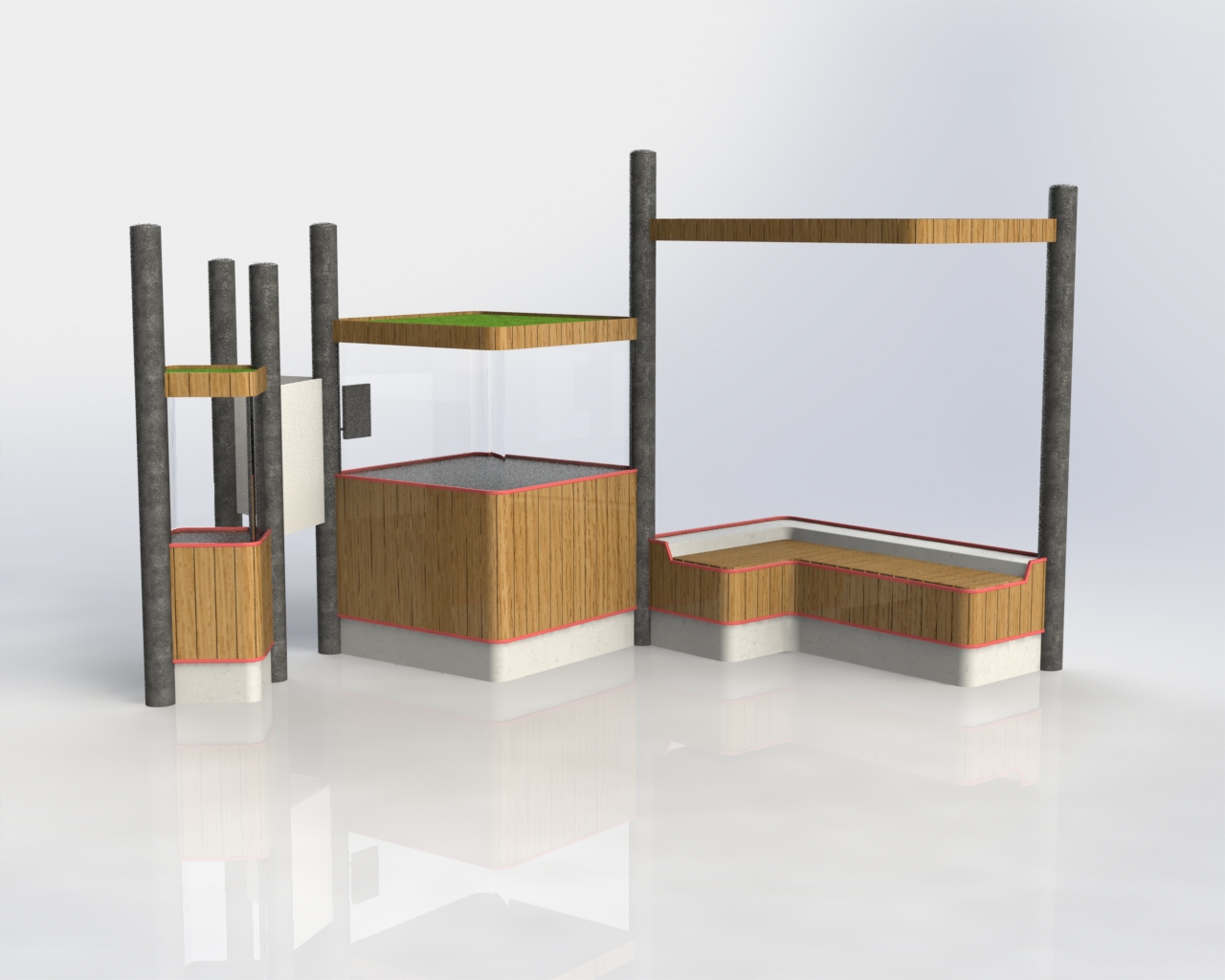
This is a group project from my second year. The goal of this project was to design a product service system (PSS)
Explore the city in a new way! With this combination of physical product and digital service a city walk becomes interesting for everyone. Culture Hubs provides interactive city walks with the use of so-called hubs in combination with AR-stickers and an app.
Culture Hubs is a product service system (PSS). This means that the product does not work properly without the service and vice versa. Our group wanted to design something that would be interesting for people of various ages. The idea of interactive city walks was born. Also city could be content with this design, because it would add a new tourist attraction to the city.
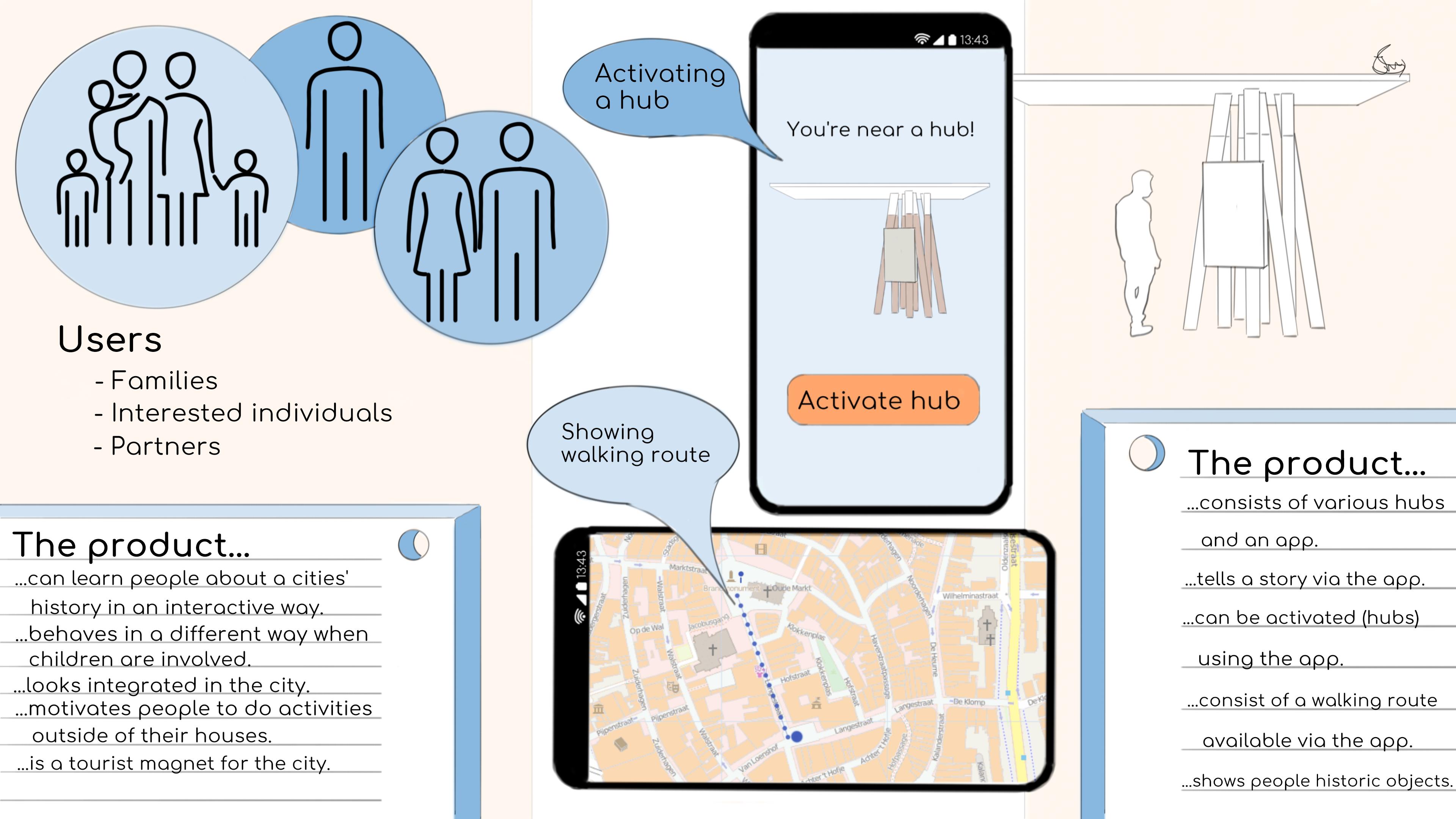
When following a route, which is purchased in the app, you come by various hubs and AR-sticker points. On the way you will be guided by a story. When arriving at a hub it can be activated using the app. The story will come to life with the use of light, audio and movement within the display cabinets of the hub. AR-stickers along the route show, for instance, a cityscape from earlier times. We also thought about the younger ones, because special child versions of the tours are made. Different versions of the same tour can be followed at the same time, because a maximum of five devices can be connected per tour.
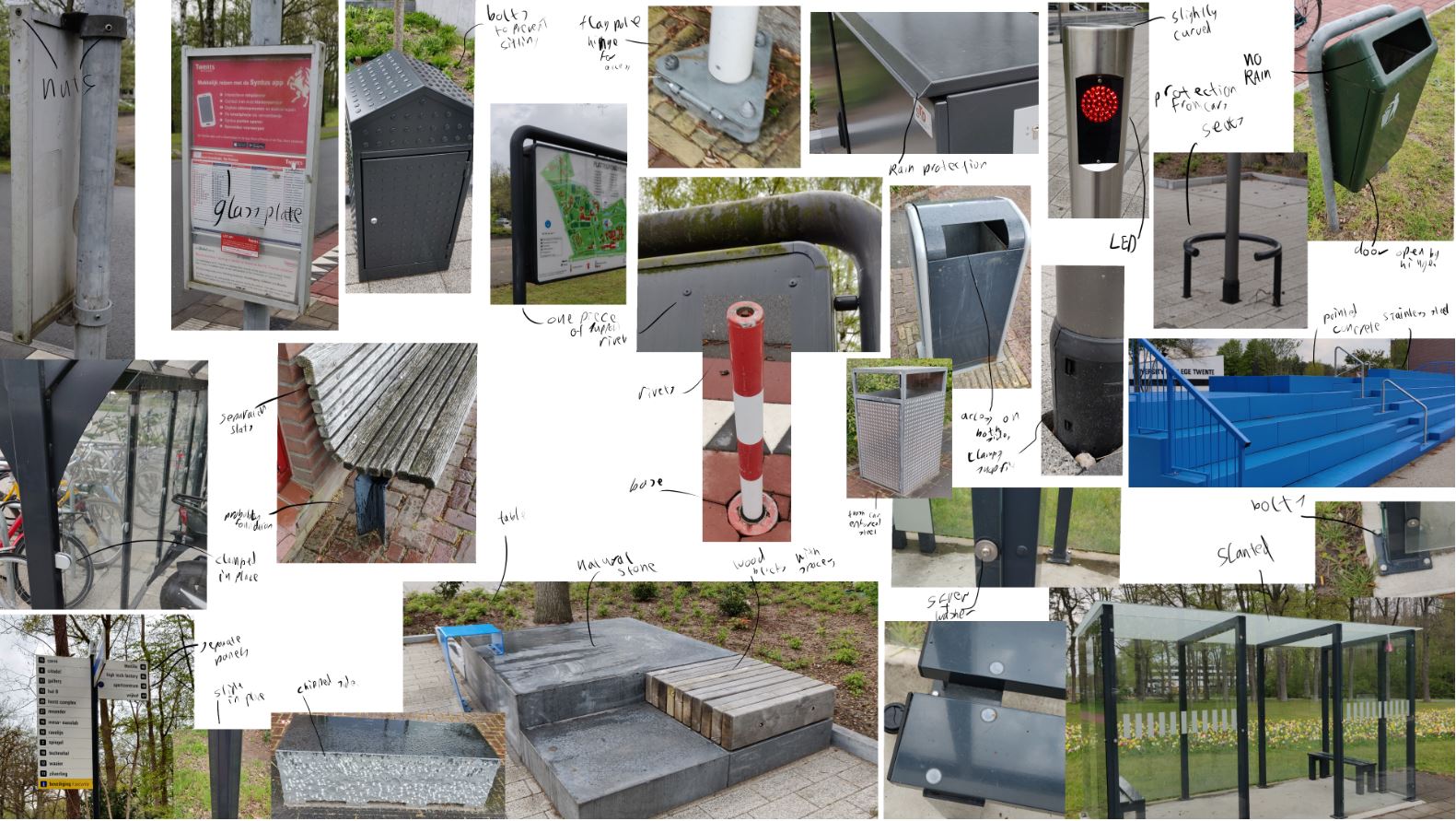
The hubs are the main product of the PSS. They can be compared with tiny museums in the form of street furniture. We started the project by looking at existing street furniture. Next to digital research did we also take a look at the campus of the University of Twente.
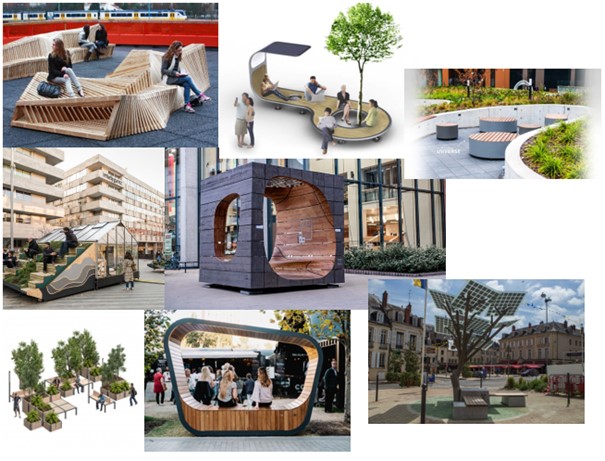
A list of requirements followed. Now we could start with designing the hub. We had various ideas and chose for a design which was both modular and minimalistic. A modular system is preferable, because not every city is build in the same way. We want to use the space as optimal as possible. Next to this, a minimalistic design fits in almost every city.
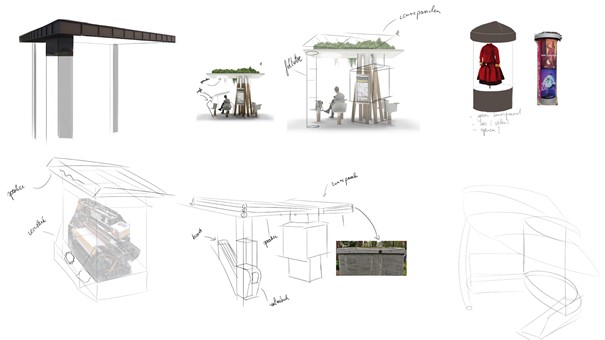
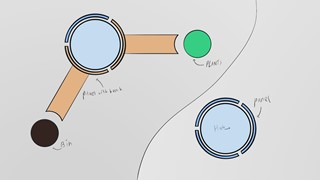
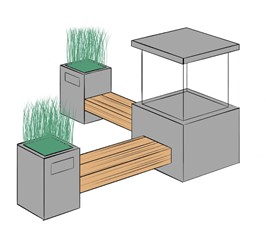
We continued by making two scenarios: one worst case scenario and an ideal situation. We updated our list of requirements with this information: It should not be comfortable to sit on the benches for longer than 15 minutes. In this way we want to prevent that the hubs become hangouts.
After this, we made new sketches of the hub were we would like to integrate a roof for days with a bright sunlight or rain. Placing a roof on the whole hub became quite bulky, so we decided to place it only above the benches.
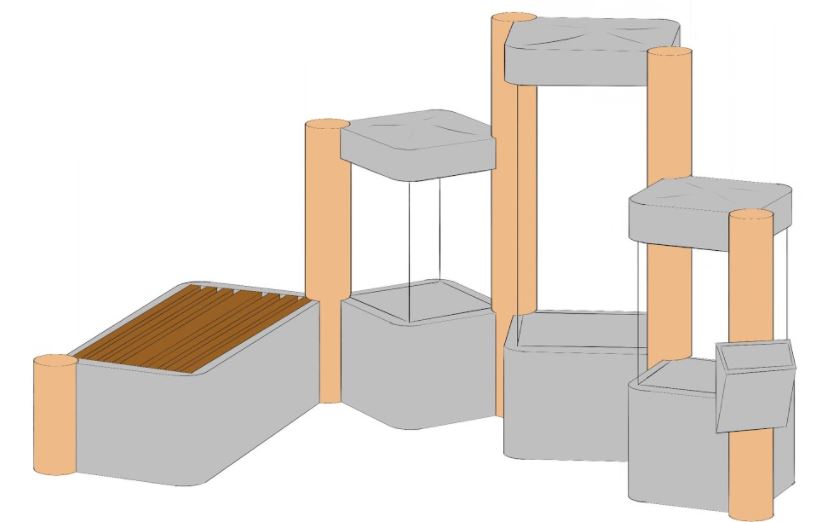
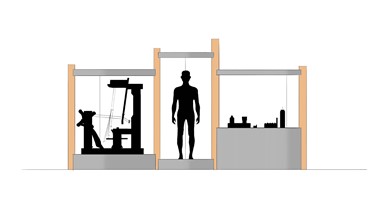
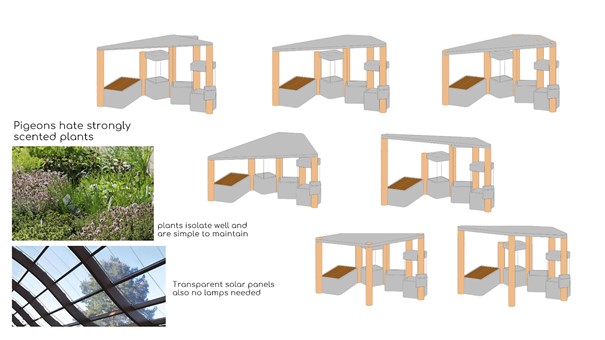
We read articles about street furniture to be able to determine the materials. We found that not all materials are suited for the job. In the end we chose for a combination of concrete, steel and wood. For the roofs we will be using plants, because of these reasons: plants are good insulators, easy to maintenance, strong scented plants keep pigeons away and the plants will give the city some colour.
We also decided to implement small screens into the hub, so users can read along with the story they hear through their smartphone. When there is a lot of noise, it can be difficult to hear your phone.
The app can be seen as the component that connects the users, hubs and AR-stickers. The story of the tour will be told in the app. Also, the app is used to activate the hubs and stickers. We started the design process with making an ‘’interface-canvas’’. The user and product are described, with in the middle the app. The app should help the user perform tasks with the product.
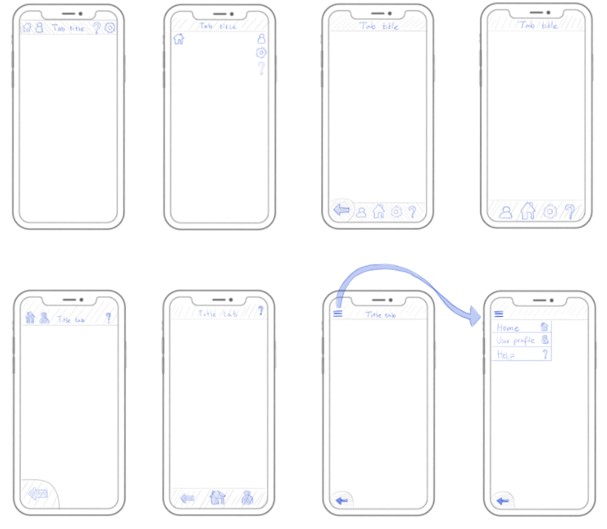
We made a first mock-up version of the app. We printed it, so we could do usability testing. The testing was done by four people who didn’t know anything about our PSS, so we got an unbiased result.
From the test we learned that the structure of the app was still lacking some clarity, so we made a list which stated which page should include which functions. We also researched the best method to navigate within the app. We chose a minimalistic design. Every page had a ‘’return-arrow’’ and ‘’home button’’. Other functions can be found on the hamburger menu at the top of the screen.
The final design has strong contrasts in order to be clearly visible in bright sunlight. Also, the design is simple, so users won’t get easily distracted. App instructions were added when opening the app for the first time, so users will get to know how the app works.
De website van Culture Hubs is te bezoeken via de onderstaande knop.
Personal contribution to the project
I was given the task of secretary during this project. I made sure that notes were taken during the meetings and that everybody was able to find all necessary documents. Next to this I contributed to theoretical and practical work of the project: designing and testing the app, researching materials for the hub, writing the text for the website, making the website and writing an example story for the project. With this project I learned that it is a challenge to design a good combination of a product and a service. Both parts should be equally detailed for the final product to be a solid PSS.