Design Methods
Conceptual Design Methods - 2025
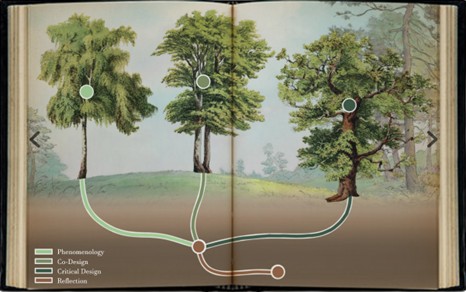
Within this group project the focus point was on learning and experimenting with three ‘’alternative’’ design methods. Working within the theme of creating teacher awareness for stress within students phenomenology, co-design and critical design have been applied to develop solutions for this problem. All exercises, together with a reflection, are placed in a digital portfolio which has been made in Figma.
The project consisted of five phases, with the first phase being a short literature research with the goal of gathering a better understanding of the problem. By reading papers and attending a presentation given by a member of SWIP (Student Wellbeing Improvement Programme), a better understanding of the problem was gathered. This resulted in the following design question: ''raise teachers’ awareness of student wellbeing and inform/train teachers on how they can contribute to student wellbeing''
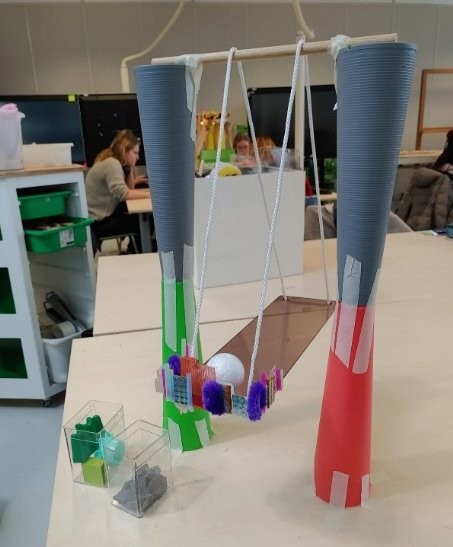
With this design challenge, phase two started. In this phase phenomenology was applied to develop a solution. Phenomenology is a method which sets the feelings and emotions of the designer at the centre of the challenge. Within the context of this project this meant we had to describe our feelings when experiencing stress related to study activities. We tried to translate this feeling towards an object. This resulted in a scale, which acts as a metaphor explaining the balance a student tries to keep during their studies. By adding deadlines – grey stones – the scale loses its balance. Activities like feedback sessions – green objects – can restore the balance and make sure the student – small ball – will not fall off.
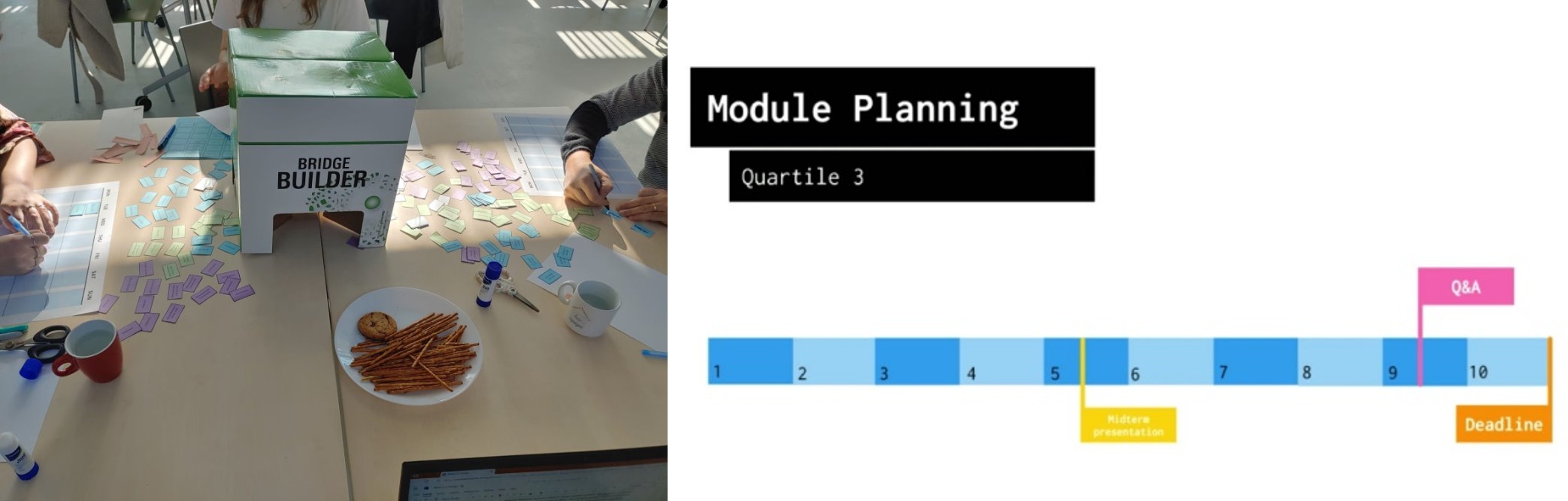
The second method was co-design. Within this method, in contrast to phenomenology, the user is placed in the centre. During the co-design session we got the opportunity to talk with a teacher who gives lessons about teaching techniques to other teachers as well. We used the session to create, together with the teacher, schedules for a day, week and module. This schedules were compared with the ideal schedule according to a student. This was the introduction to a discussion between the two parties. Together, they created a new schedule which did fit them both. This schedule formed the basis for a concept where an (online) tool was developed. This tool can aid teachers in creating schedules.
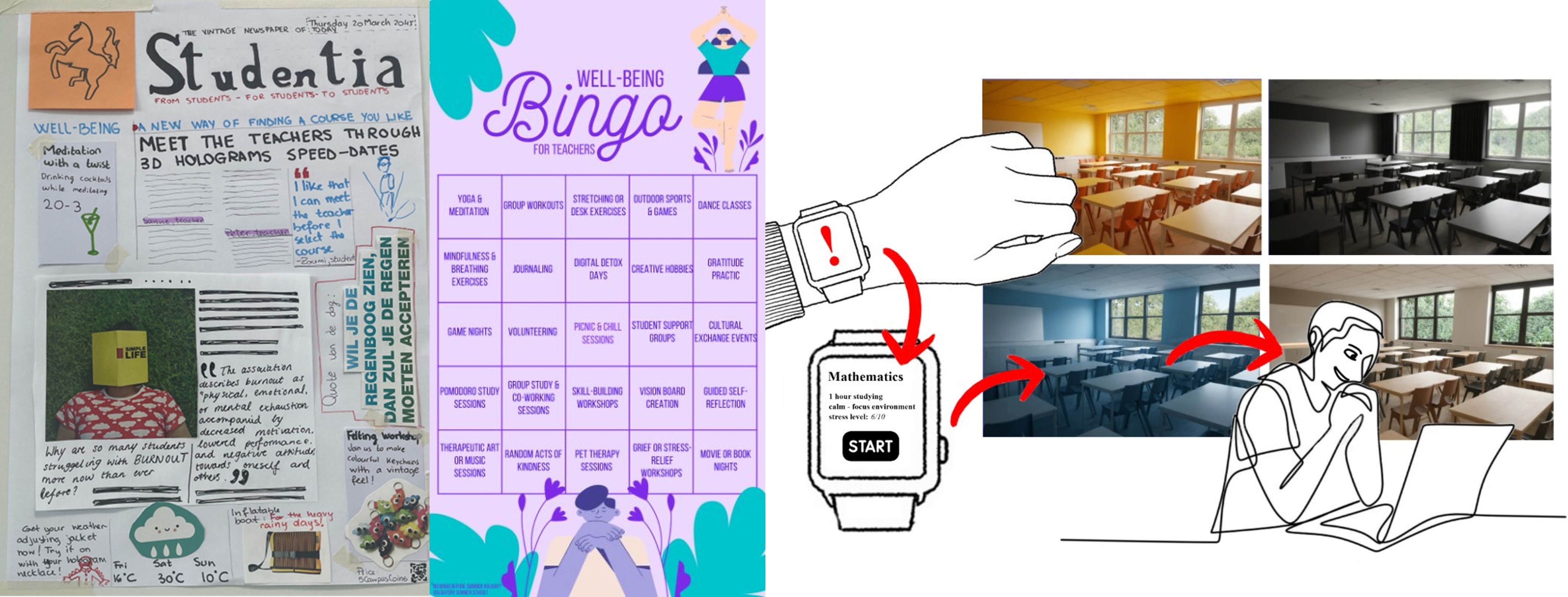
The last method was critical design. The goal of this method is to provoke people and to let them reflect according to a design. Often, the design are situated in the future – this can be both the near and far future. To prepare for designing a critical concept we practiced with three assignments. These were a newspaper of the future, a punk-zine and a counterfactual paper object. These small objects are situated in a future of around 15 years from now and give an impression of how this future could look like. The final concept for this method is an installation of an ecosystem in which students are monitored constantly. The gathered information is used to change the ecosystem – the colour of the lights change or a deadline is extended.
The last phase of the project was about reflection. A comparison between the three different methods was made. From this, it became clear the methods could not be compared with the goal to find the ‘’best’’ method. Each method has its own strengths and weaknesses. Therefore, it depends on the context and the goal of the designer which method fits best.
The final portfolio and the prototype of the planning tool (co-design) can be found via the buttons below.
Personal contributions to the project
Within this project I took a variety of roles. I executed the first literature research in phase one of the project and made a summary of this for the introduction of the final portfolio. Next to this, I contributed within each method with creating concepts, prototypes and reading literature. During the co-design session I took the role of the observer. This meant that I took notes and photos which could be used later on for the concept development and reflection. Lastly, I created the digital portfolio using Figma. I created summaries of the previous, midterm, reports and wrote parts of the reflection for this portfolio document. By doing this project I learned the existence of diverse ‘’alternative’’ design methods. They can be applied to create new insights, depending on the context and goal of the design. These methods can help to think outside the box which is the traditional design process.